
2026年2月13日から15日の間に行われたアートプロジェクト「DIG SHIBUYA 2026」。
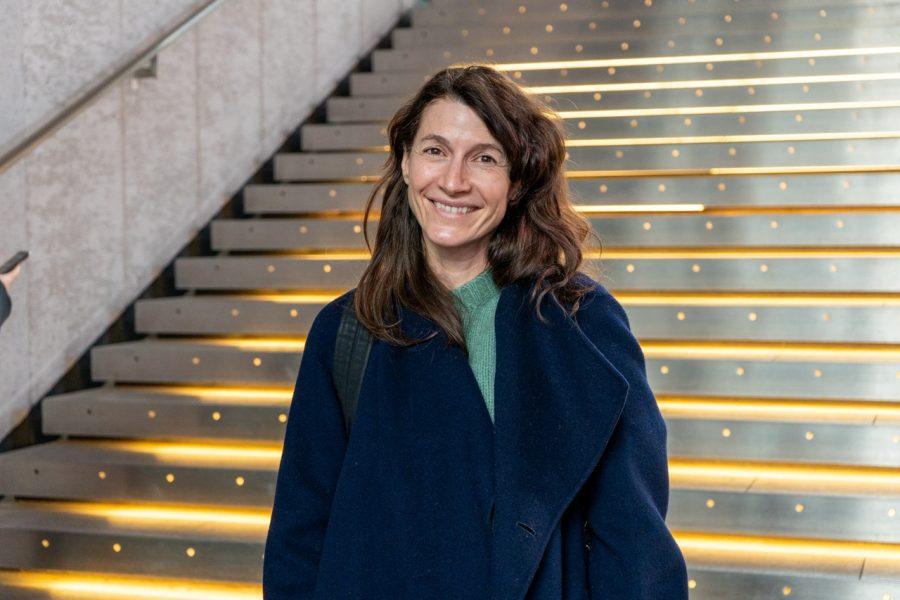
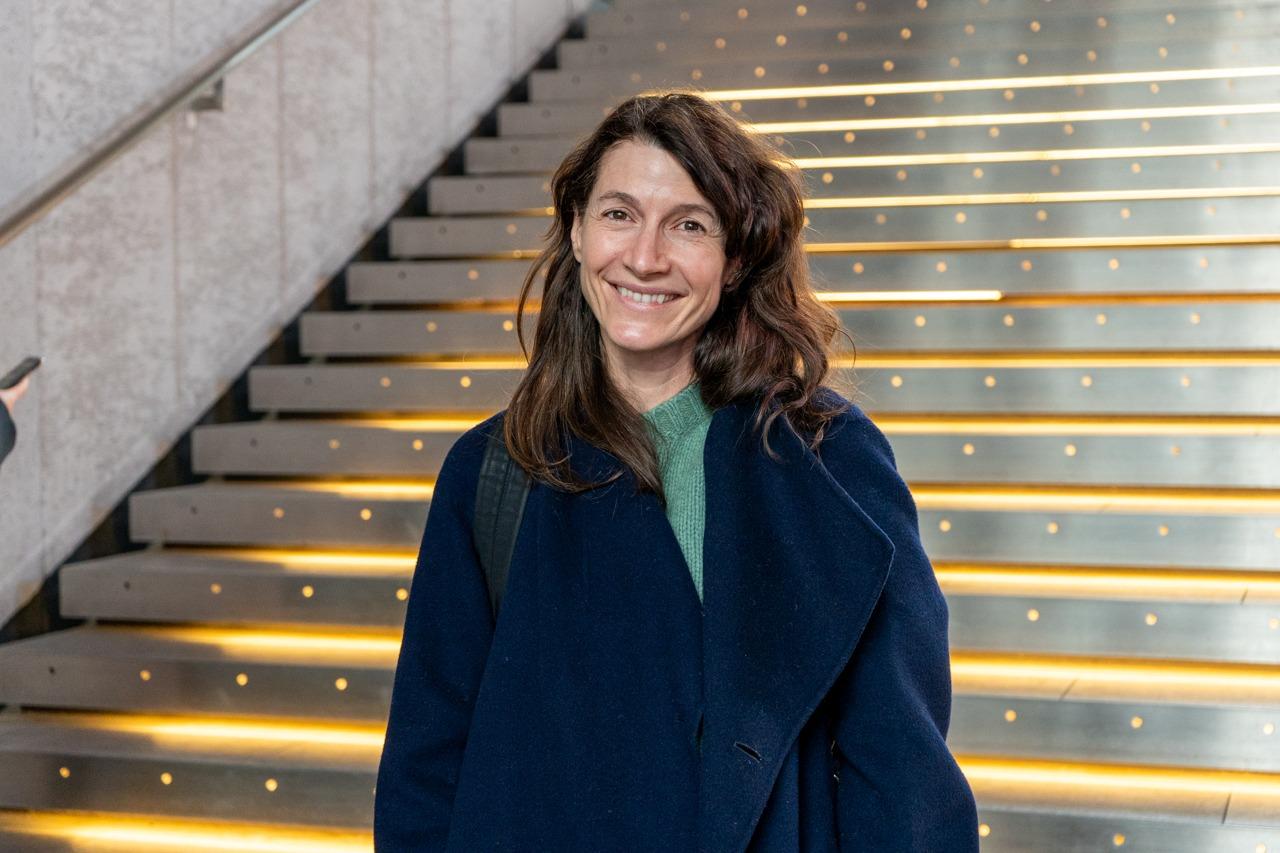
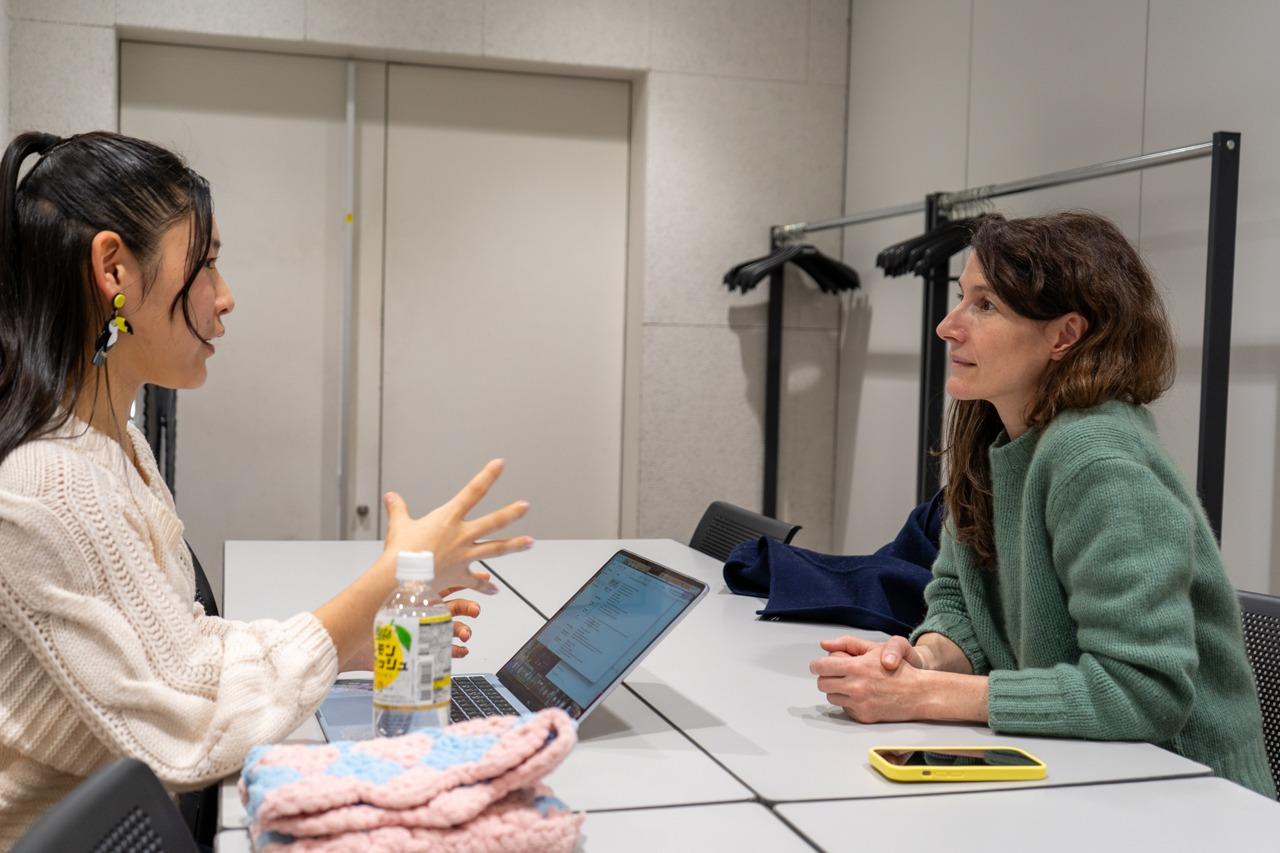
国道246号横断デッキに「Hello! Duetti(Duetti)」という作品が展示されていました。期間中に作家であるメリッサ・モンジアさんにお話を伺いました。
Ms. Melissa Mongiat, visiting Tokyo for a week during the exhibition of the art piece ‘Hello! Duetti’ at DIG Shibuya Festival (DIG渋谷), took time from her busy schedule to speak to us about the creative processes of her work.
Duetti を作るまでに
The Backstory Behind Duetti
ーー自己紹介と展示品について教えてください。
ーーPlease introduce yourself and your art piece.
カナダのモントリオールにある体験型アートスタジオ「Daily tous les jours」の共同創設者です。公共の場を使ってアート、パフォーマンスとアーバンデザインをしています。
仕事への愛は「参加が好き」なところから生まれました。
この仕事が好きなのはアート作品と触れ合う人の多様性を見れるから。
パートナーのムナ・アンドラオスさんとは、Daily tours les jours のクリエイティブチームと一緒に、世界中の48以上もの都市で活動してきました。チームにはたくさんの分野に特化した人たちがいて、そのたくさんの能力を集中して作品をつくっています。
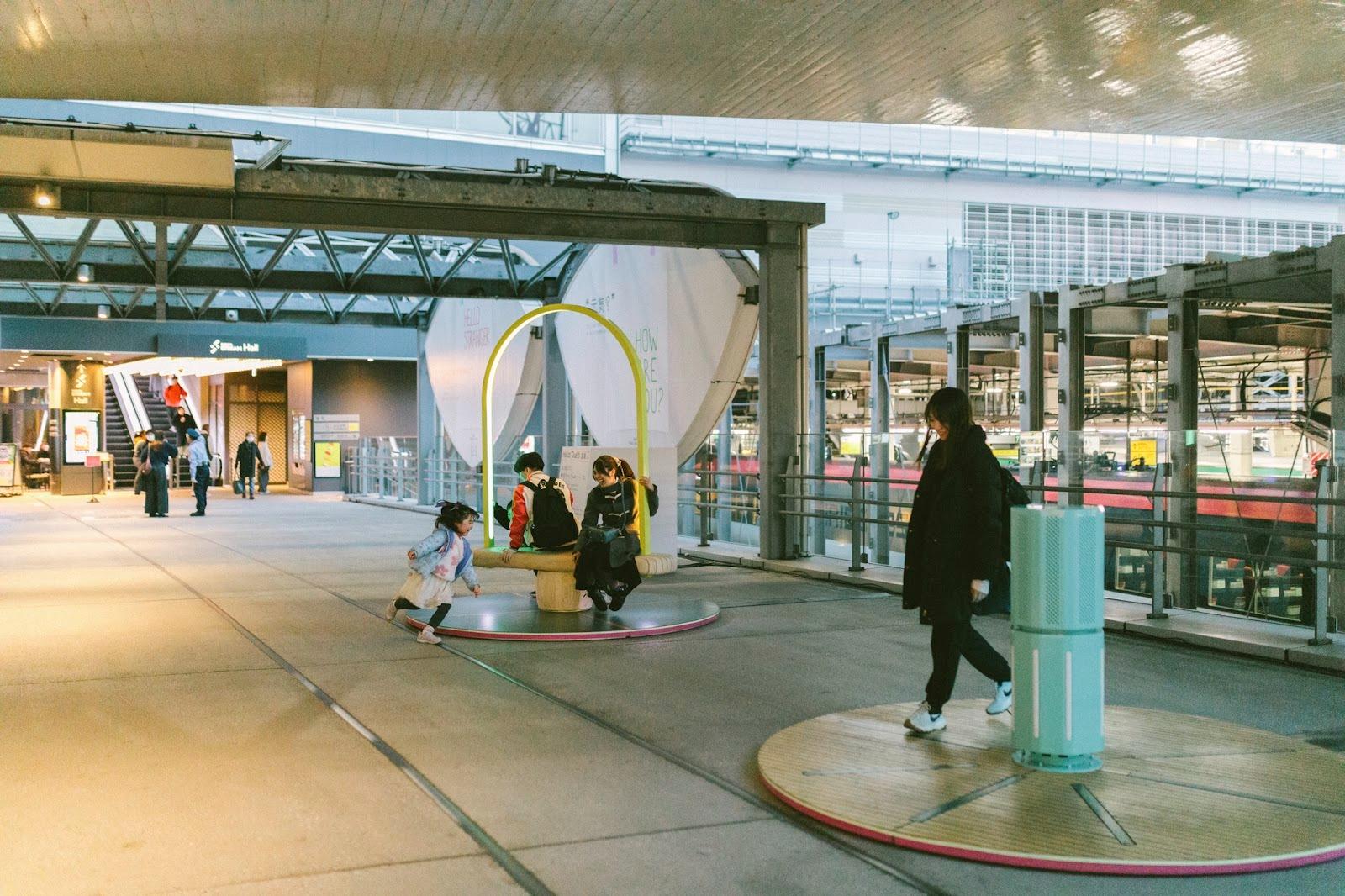
今回渋谷で展示した「Duetti」は、4ヶ月ほどミラノでも展示されていた巡回作品です。この作品を通して、公共の場で音楽と対話型アートを楽しめる環境をつくりあげています。作品は2つのピースで出来ています。「Daydreamer」と「Whistle, Two, Ready!」という作品をセットで展示しています。回転するベンチとボラードに触れ合うことで色んな音を作ることができます。
2つのピースと触れ合って唯一無二の音楽を作れます。
Ms. Melissa Mongiat, is the cofounder of Daily tous les jours, an interactive art design studio based in Montreal, Canada. Her studio works in public spaces, incorporating interactive art, performance art, and urban design.
Ms. Melissa’s love for her work stems from her love of participation. “… working in public spaces, because it’s seeing the diversity of people who can engage in art.” With her cofounder Ms. Mouna Andraos and their creative team, they have worked on over 48 projects in various cities across the globe. She described Daily tous les jours’ works to be the “concentrated efforts of many”, as an interdisciplinary team of specialists are on board for every project.
The piece in Tokyo right now is a piece called ‘Duetti’. It is a touring piece of artwork, previously having been in Milan for 4 months. The objective of the piece is to create a venue for music and interactive art in a public space.
It is composed of two main pieces, both individually exhibited pieces called ‘Daydreamer’ and ‘Whistle, Two, Ready!’ There is a musical spinning bench and a bollard, which both conduct different sounds when interacted with. Presented together as a cohesive piece, they create music and tones original to the interaction.
ーーDuetti のインスピレーションはなんですか?
ーーWhat was your inspiration for Duetti?
ベンチでゆっくりリラックスすることができて、ボラードだと歩いたり踊ったり、アクティブに触れ合えることに価値があります
「Daydreamer」をデザインしている時、ロッキングチェアについてたくさん調べました。ロッキングチェアがなぜ空想するのに使えるのか、脳科学的な面から見ました。それと同時に、音楽が精神にどう影響するのかなども考慮してデザインをしました。
作品をデザインする中で、もうひとつフォーカスをおいたポイントはマイノリティやアクセシビリティーです。
作品を作り展示する際、マイノリティーのことを表現することも大切にしています。
公共の場はすべての人のものだから、すべての人がアクセスできるものを作ることが大切です。
そして展示された作品との接し方を見ると、新たな気づきを得ることもあります。
「Daydreamer」のベンチにはアーチがついていています。デザインの過程ではアクセシビリティーを目的に足されたものでしたが、展示されてみると、アーチを押して乗っている人を回してあげている人もたくさんいました。
このように知らない人とでも交流できるチャンスを作れることは喜びです。
“There was something really valuable in having people sit and relax (on the bench), and the bollard be the one that is more active, and you walk and perhaps even dance.”
When designing the bench for ‘Daydreamer’, the team looked into rocking benches, and how they induce daydreaming, and the neuroscience behind that phenomenon. Along with that, they studied how creating music enhanced your psyche.
Another facet Daily tous les jours takes into account when creating their pieces is representation and accessibility.
Throughout the interview, Ms. Melissa spoke about how representation of minority or underrepresented groups was also a goal within their projects. She spoke about how important it was for this to be considered because of the nature of public spaces.
“You want to honor it by trying to serve all the people that the public space is trying to be created for.”
Watching how the audience and public interact with Duetti has also given them another perspective on how their works create interactions. With the bench, there is an arch that can be used to push the bench around. While it was originally put in place for accessibility, during the exhibition, many people would give each other rides, which Ms. Melissa said was “very nice to see”.
ーー作品を作る中で一番好きな過程はどれですか?
ーーWhat do you enjoy most about the creative process?
全ての過程が好きです。プロトタイピングはとても楽しいです。アイデアがものになり始めて、達成感を感じます。
実践の段階になると、チームでより現実的なアイデアなどを共有することができます。
他にも、つくる過程では想像していなかった使い方なども見つかったりします。最初のデザインと印象が変わっても、新しい触れ合い方を見つけることがアートをよくします。
公共の場での展示が多いため、使える材料は限られます。天候に影響されず、人がたくさん遊んでも壊れにくい材料を探すのは簡単ではありません。活動の拠点となっているモントリオールではアルミニウム、鉄、木材などがたくさんあります。
材料を選ぶ際、サステイナビリティーや二酸化炭素排出量なども意識して選んでいます。
“I love all of them. I think prototyping is really fun. You start to see how concretely the ideas can be realized, which is really rewarding.”
She explained to us how the stage of prototyping allows for ideas to become more tangible and shared through the team.
Prototyping is also often the time when the members of the team see that people interact with their designs in different ways than originally imagined. While it does change the image they had in mind, Ms. Melissa told us that these new methods of interaction only add to the art.
Because of the nature of their work, and the settings in which they place their exhibits, she mentioned how the selection materials tended to become limited. They needed to be robust, weather-proof, and most importantly people-proof. With interaction comes wear and tear on the pieces, so materials are an important consideration to their work.
Based in Montreal, they have resources such as aluminium, steel, and a type of industrial wood.
With their choice in materials comes a sense of responsibility in their goal of sustainability and reducing carbon footprint, all while making their ideas come to life.
体験型アートの将来について
The Future of Interactive Art Exhibitions
ーーDuetti が渋谷に展示されていることがなぜ大切ですか?
ーーWhy was it special to you that Duetti was being exhibited in Shibuya?
今回の展示は Daily tous les jours にとって初めての渋谷での展示でした。渋谷のような忙しい町でアートを展示することを特別な体験です。
私たちのチームにとって東京や渋谷はインスピレーションであって、その街の一部になれて嬉しいです。
渋谷はアートやテクノロジーの最先端で、独自のリズムがあって、なんでもできる場所です。渋谷はいろんな年齢や背景の人がいて、ダイバーシティーがある町です。
そんないろんな人がいる町で、Duetti を体験してもらうことに価値を感じています。
アートと触れ合うと笑顔になって、そうすると周りの人も笑顔になり、笑うことによって幸せホルモンなども出て、いい効果がたくさん見られます。
With this being her first exhibition in Shibuya, she gave us a clear insight into what it means to have artwork installed in such a busy hub of a city. She spoke to us on how Tokyo and Shibuya are such a big inspiration for many members of their team. “It’s nice to be part of the magic,” she said.
“Shibuya is the forefront of art and technology, and there’s a rhythm, and so many things are possible here.”
“There are so many people, and it’s a celebration of diversity, from all ages and backgrounds.”
She described how the interactions and the feelings that people experience with Duetti are contagious. People smile as they interact with their art, and hormones such as dopamine are released. And as more people smile, a chain effect occurs, creating a lasting impact.
Shibuya, being a transit hub, is a challenging location for interactive urban art to be installed. However, with Duetti, it felt like a natural fit, as it created a contrast between the busy streets and the more dreamy atmosphere.
Ms. Melissa described Duetti as ‘making a little detour’ from the rest of the city.
ーー将来の目標について教えてください。
ーーWhat are your goals for the future?
世界中でテクノロジーが進化し続ける中、人と人との意味のある触れ合い方を大事にしていくことを目標にしています。
将来の環境に人がどう慣れていき、人間とロボットが作ったものに対してどう感じるかに興味があります。
Daily tous les jours にとっての目標は展示品を増やすことだけでなく、より長い期間展示することです。
As the world and technology advances, Ms. Melissa hopes that people will continue to have meaningful connections and interactions with each other.
“I’m interested in seeing how humans will adjust with what’s around them in the future, how we will be more savvy about what has been created by humans and robots.”
From a more practical perspective, she spoke about her goals for her team and the installation of their projects in public areas. While the Daily tous les jours have many projects, both temporary and permanent, Ms. Melissa brought up a goal from another perspective.
“I think it’s not about where, but how long, to establish a long lasting relationship with the people who use the area.”
インタビュー後の感想
My feelings post-interview
インタビュー中、メリッサさんは影響の測り方について話していました。地域や政府は予算の中にアートを入れていないため、説得する力が必要、と話していました。
メリッサさんが言っていた通り、公共の場でアートが第一優先ではないかもしれないけれど、そのエリアの価値があがります。経済的、精神的、環境的なインパクトを考えて行動していて、アートと触れ合うことで得られる体験や気持ちをとても大切にしていることがわかりました。
将来的には渋谷のような未来都市で、もっとアートや体験できる機会を増やしていけたらいいと思います。そうすることによって人と渋谷を繋ぐだけでなく、人と人との繋がりも大切にできると思います。
Throughout our talk, Ms. Melissa often spoke about the importance of measuring impact. Many public spaces, and governments who maintain the public spaces do not have a budget for interactive art.
As a high school debater, I often weigh out impacts during my speeches. I felt that Ms. Melissa’s way of explaining her work, and how she laid out her works’ impacts set a clear picture on how, while urban art is often not the first priority for public spaces, that it enhances the value of the area by unbelievable means. Whether it be economic magnitude, or emotional capacity, or environmental changes, people have a net gain through their interactions with art.
In the near future, I hope that futuristic cities such as Shibuya are able to integrate more interactive art into the city, creating more interactions not only between the city and the people, but between the people themselves.
◾️Daily tous les jours 概要
https://www.dailytouslesjours.com/en
学校ではボランティア部部長と英語ディベート部副部長やってます!
バイリンガルを活かして記事を書けるように頑張ります!